Gran Canaria has beaches for every kind of holiday: a city beach where locals swim before work, golden dunes that look like the Sahara, calm resort coves and wild beaches you can only reach on foot or by boat. Here are the ones worth your time, island by area.
Quick answer: for a real local beach, Las Canteras in Las Palmas. For the famous dunes, Maspalomas. For calm water with children, Amadores or Puerto de Mogán. For something wild and empty, Güí-Güí. For natural pools, the north coast around Agaete.
Gran Canaria beaches at a glance
| Beach | Area | Best for | Swimming |
|---|---|---|---|
| Las Canteras | Las Palmas (north-east) | City life, snorkelling, sunsets | Very good near La Barra |
| Maspalomas | South | Dunes, long walks | Good on calm days |
| Playa del Inglés | South | Lively resort beach | Good |
| Amadores | South-west | Families, calm water | Very good |
| Puerto de Mogán | South-west | Pretty harbour, easy beach | Very good |
| Güí-Güí | West | Wild and empty | Only on calm days |
| Sardina del Norte | North-west, Gáldar | Snorkelling, diving | Good |
| Las Salinas de Agaete | North-west | Natural pools | Good when the sea is calm |
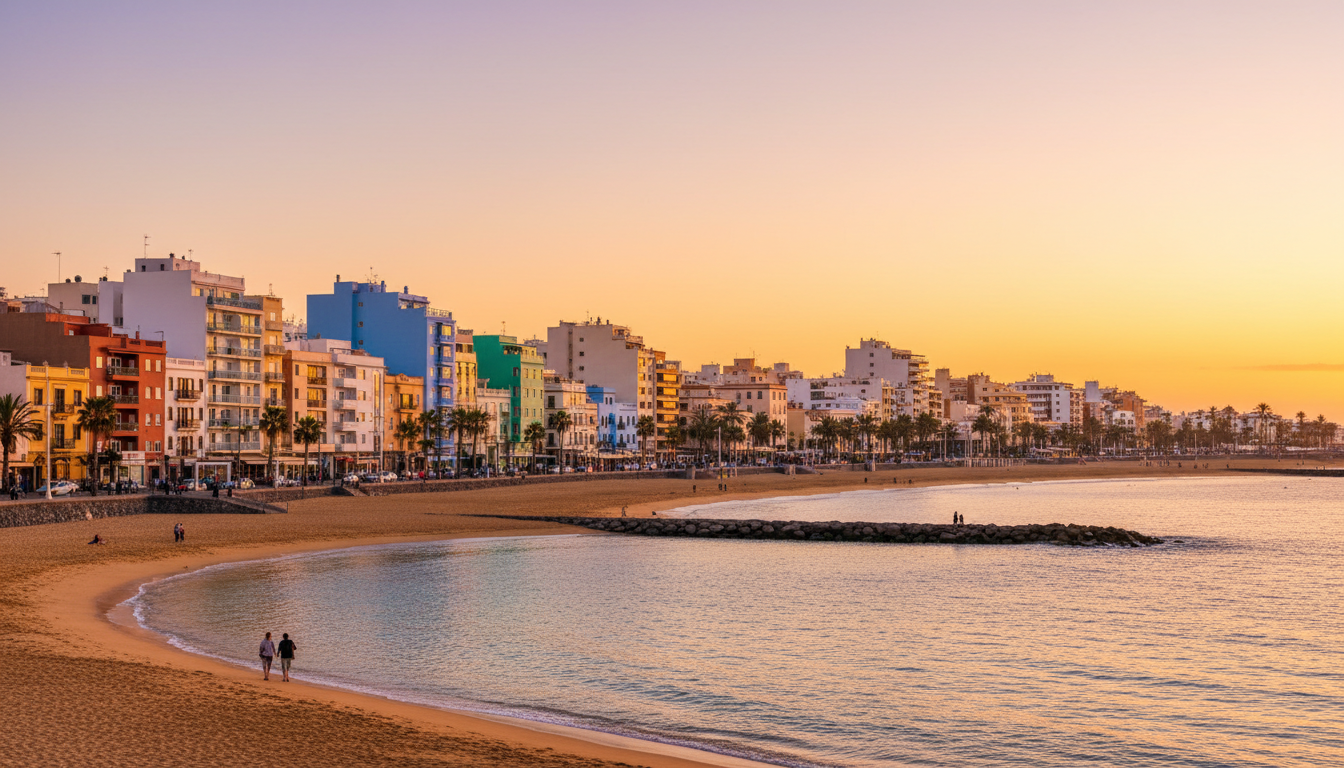
Las Palmas: Las Canteras
Las Canteras is one of the best city beaches in Europe. It runs for about three kilometres along the promenade of Las Palmas, and a natural rock reef just offshore, called La Barra, protects much of the beach and keeps the water calm. It is great for swimming and easy snorkelling, and the sunsets over the sea are beautiful. The southern end, La Cícer, gets more waves and is popular with surfers.
Local tip: walk the promenade at sunset and have dinner at one of the terraces looking over the beach. It is how many locals spend their evenings.
The south: Maspalomas and Playa del Inglés
Maspalomas and the dunes
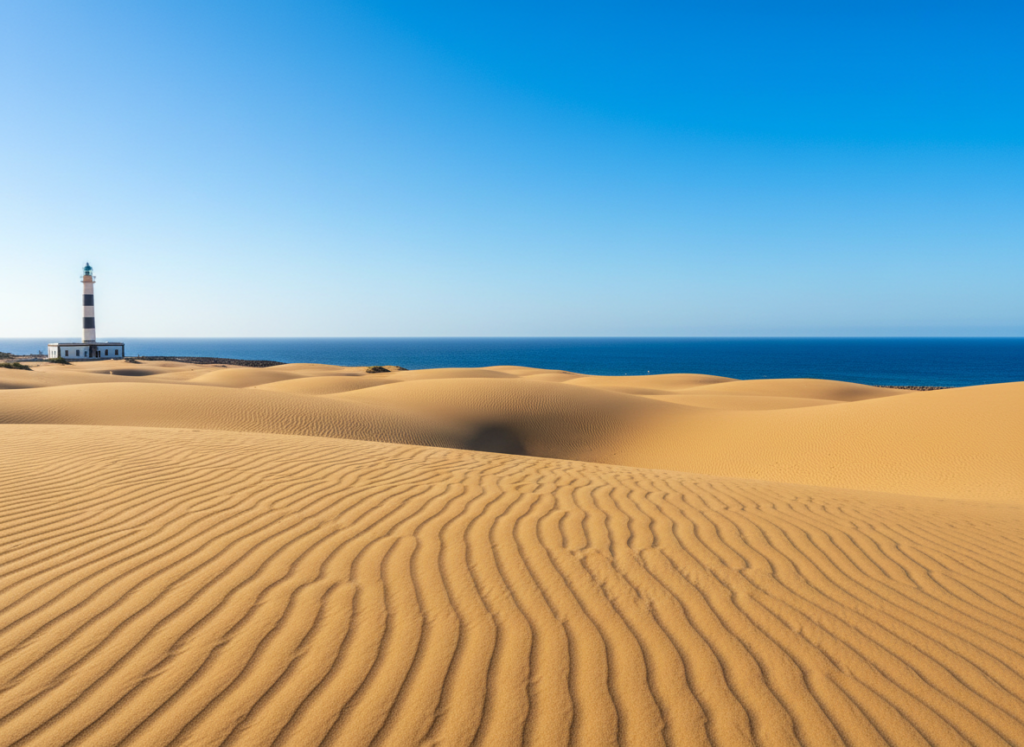
The Dunes of Maspalomas are a protected nature reserve of golden sand hills that run all the way down to the sea, with a lighthouse at one end and a small lagoon, La Charca. Walking across the dunes to the beach is an experience in itself. Stay on the marked paths, because the dunes are protected.
Good to know: some parts of Maspalomas beach are used as naturist areas. This is normal and accepted on the island.
Playa del Inglés
Next to Maspalomas, Playa del Inglés is the classic resort beach: long, sandy and lively, with sunbeds, water sports and plenty of bars and restaurants nearby. Good if you want everything close at hand.
The south-west: Amadores and Puerto de Mogán
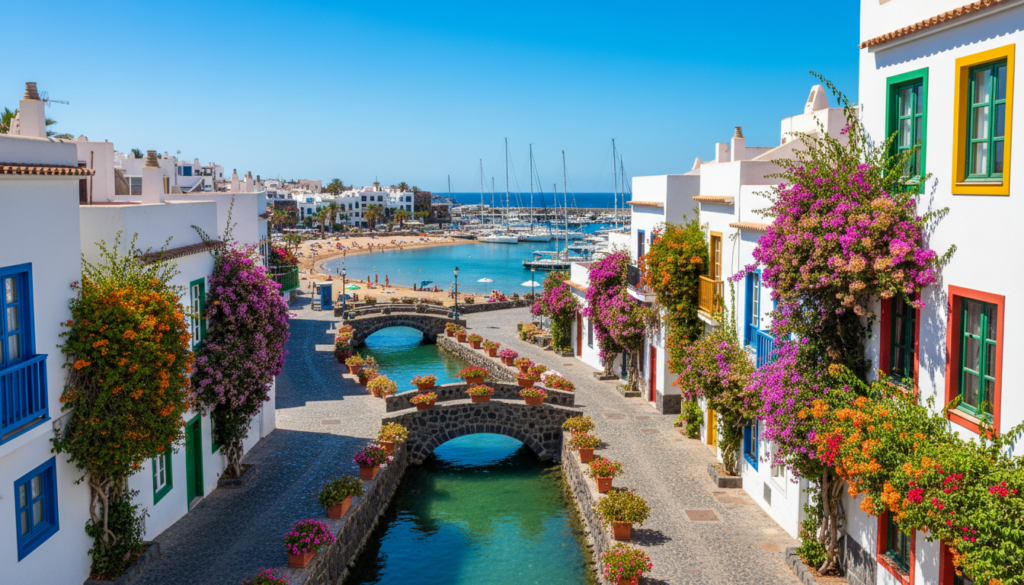
The south-west has the sunniest weather and the calmest water on the island. Amadores is a sheltered man-made cove with light sand and turquoise water, ideal for families. Further west, Puerto de Mogán is a pretty harbour village of white houses, flowers and little bridges, with a small, protected beach. Between the two you will find Puerto Rico and Anfi del Mar, both very easy beaches for swimming.
The wild west: Güí-Güí
Güí-Güí is one of the most remote beaches in the Canary Islands. There are no roads: you reach it on a steep, demanding hiking trail from Tasarte or Tasartico, or by boat. The reward is a long, empty beach under huge cliffs.
Be careful: the hike is hard and there is no shade or water on the way. Only go if you are fit, start early, carry plenty of water, and only swim when the sea is calm.
The north: Sardina and natural pools
The north of Gran Canaria is greener, cloudier and more local. In Sardina del Norte, near Gáldar, a small beach and harbour are popular for snorkelling and diving thanks to the clear water. Around Agaete and Santa María de Guía there are natural sea pools carved into the volcanic rock, such as Las Salinas in Agaete.
Local tip: natural pools are only safe when the sea is calm. If waves are breaking over the rocks, do not go in.
North or south?
If you want guaranteed sun and calm water, stay in the south or south-west. If you want a real city, culture and local life, stay in Las Palmas and enjoy Las Canteras. The island is small enough to see both in one trip. Not sure which island to choose? Read which Canary Island is best for you.
Frequently asked questions
What is the best beach in Gran Canaria?
Las Canteras for a local, city beach and the Maspalomas dunes for scenery. For families, Amadores and Puerto de Mogán.
Which part of Gran Canaria has the best weather for the beach?
The south and south-west, from Maspalomas to Mogán, are the sunniest. The north can be cloudier, especially in summer.
Is Las Canteras good for snorkelling?
Yes. The reef that protects the beach creates calm water with fish close to the shore, so it is one of the easiest places on the island to try snorkelling.
Beach conditions, access and services change. Always check the flags and local signs on the day.
Leave a Reply