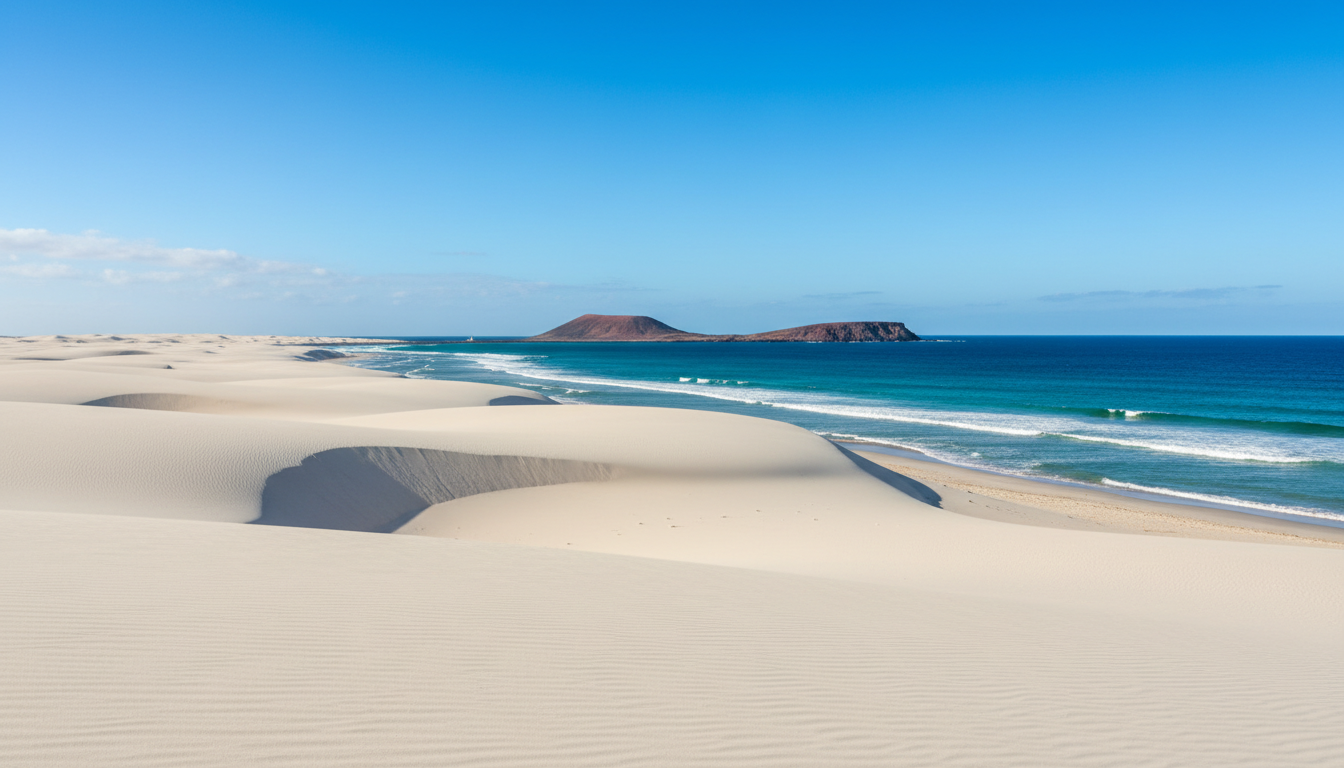
If your idea of a holiday is endless sand and turquoise water, Fuerteventura is the Canary Island for you. It has the longest and emptiest beaches in the archipelago, from white dunes in the north to wild Atlantic coastline in the south. Sotavento, on the Jandía peninsula, is one of my favourite beaches anywhere in the Canaries.
Quick answer: for calm, shallow water go to the lagoons of El Cotillo or the lagoon at Sotavento. For huge white dunes, Corralejo. For the wildest and most dramatic beach, Cofete (but do not swim there). For a day trip to a tiny island, Isla de Lobos.
Fuerteventura beaches at a glance
| Beach | Area | Best for | Swimming |
|---|---|---|---|
| Grandes Playas de Corralejo | North | Dunes, long walks | Good on calm days |
| El Cotillo lagoons | North-west | Families, calm water | Very good |
| Isla de Lobos | Off Corralejo | Day trip, snorkelling | Very good |
| Sotavento | South, Jandía | Kitesurf, windsurf, lagoon | Good in the lagoon |
| Costa Calma | South | Sheltered resort beach | Good |
| Morro Jable / El Matorral | South | Easy beach days | Good |
| Cofete | South-west, Jandía | Wild scenery | Not recommended |
| Ajuy | West | Black sand, caves | Not recommended |
The north: Corralejo, El Cotillo and Lobos
Grandes Playas de Corralejo
Just south of the town of Corralejo, a protected natural park of white sand dunes runs down to a string of long beaches. It feels like a small desert by the sea. The beaches are huge, so even in high season you can find space.
Local tip: it can be windy here. Look for the low stone walls (called corralitos) on the beach, which people build as windbreaks.
El Cotillo and its lagoons
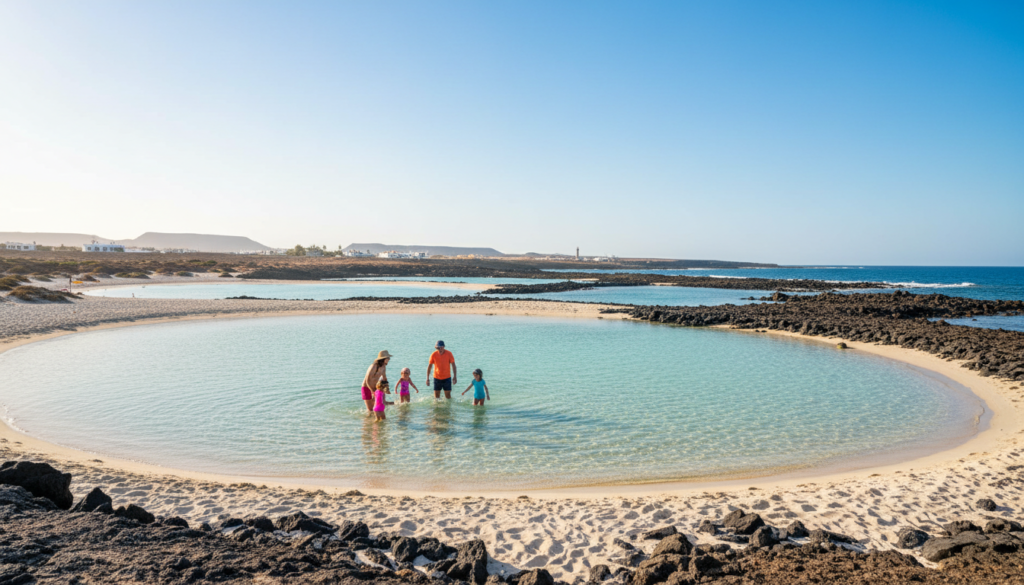
El Cotillo is a relaxed fishing village with two personalities. To the south there are long, wild surf beaches. To the north there are small coves where reefs create calm, shallow lagoons with white sand and clear water, perfect for children and for anyone who wants an easy swim.
Isla de Lobos
A tiny protected island a short boat ride from Corralejo. It has walking paths, a lighthouse and a small sheltered beach with very clear water that is great for snorkelling. Visits are limited to protect the island, so check before you go whether you need to book a free permit online, and take water and sun protection because there are almost no services.
The south: Jandía, Sotavento and Cofete
Sotavento
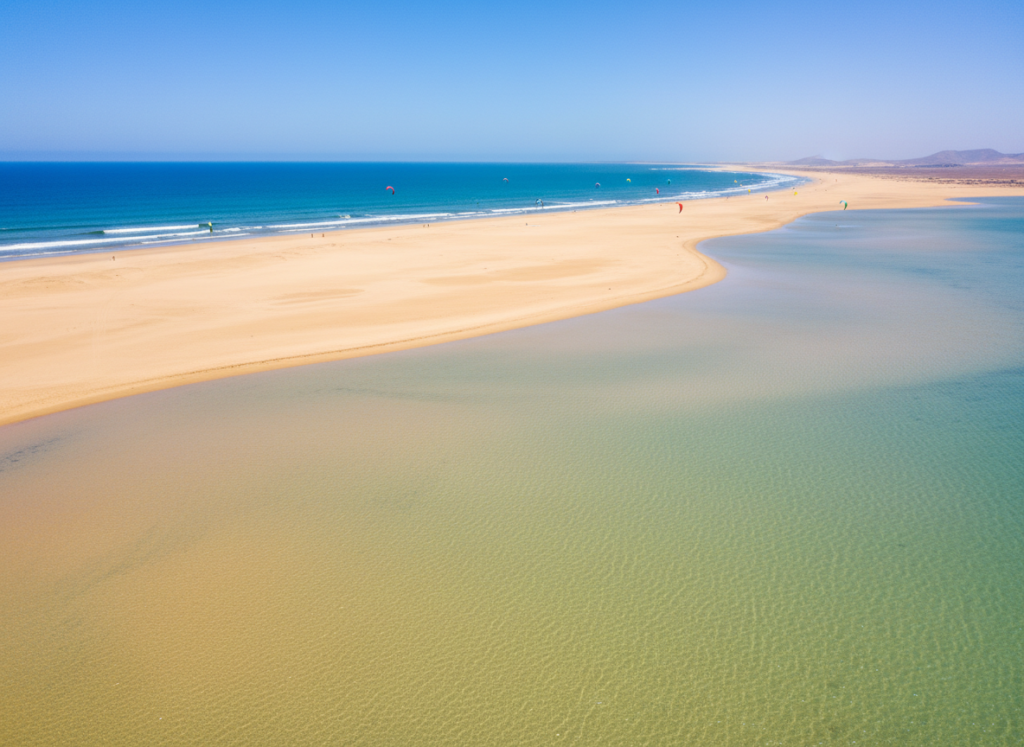
One of the most beautiful beaches in the Canary Islands and one of my personal favourites. Kilometres of golden sand and turquoise water, and at low tide a huge shallow lagoon forms between the beach and the sea. Sotavento is also famous all over the world for kitesurfing and windsurfing, because the trade winds blow strongly here, especially in summer.
Local tip: check the tide times before you go. The lagoon is at its best around low tide.
Costa Calma and Morro Jable
The resort beaches of the south are long and sandy, with facilities and calmer water than the wild west coast. Costa Calma is more sheltered from the wind, and the beach at Morro Jable, Playa del Matorral, runs for kilometres in front of the town.
Cofete
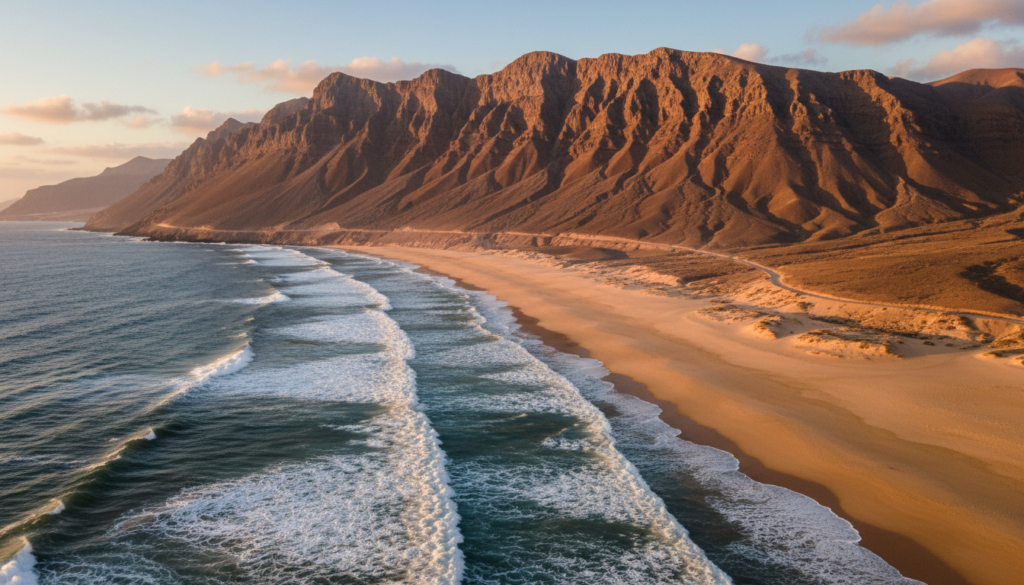
Cofete is one of the most spectacular beaches in Europe: a wild, empty beach many kilometres long under a wall of mountains, on the remote western side of the Jandía peninsula. You reach it on a dirt road from Morro Jable, so drive slowly and check whether your rental car is allowed on unpaved roads.
Be careful: Cofete is open to the Atlantic, with strong currents and no lifeguards. It is a place to walk and take photos, not to swim.
The west: Ajuy
Fuerteventura is mostly golden sand, but at the fishing village of Ajuy you will find a black sand beach and a short coastal path to dramatic sea caves. It is more of a visit than a swimming beach, because the sea here is often rough.
Wind, sun and safety
- Wind: Fuerteventura is one of the windiest islands, especially in summer. Sheltered beaches and windbreaks make a big difference.
- Sun: the wind makes it feel cooler than it is. Use high factor sun cream and reapply often.
- Currents: the west coast and many open beaches have strong currents. Respect the flags and swim at beaches with lifeguards when you can.
Fuerteventura is also one of the best places in Europe to surf. Read my guide to surfing in the Canary Islands, or compare it with the other islands in which Canary Island is best for you.
Frequently asked questions
What is the best beach in Fuerteventura?
For beauty, Sotavento and Cofete. For calm swimming with children, the lagoons of El Cotillo. For dunes and an easy base, Corralejo.
Is the north or the south of Fuerteventura better for beaches?
Both are excellent. The north has the dunes of Corralejo, the lagoons of El Cotillo and Lobos. The south has the longest beaches, Sotavento and Cofete. Many visitors stay in one area and drive to the other for a day.
Can you swim at Cofete?
It is not recommended. The beach has strong currents and no lifeguards. Enjoy it from the sand.
Beach conditions, access rules and permits change. Always check the flags, local signs and official information before you go.
Leave a Reply