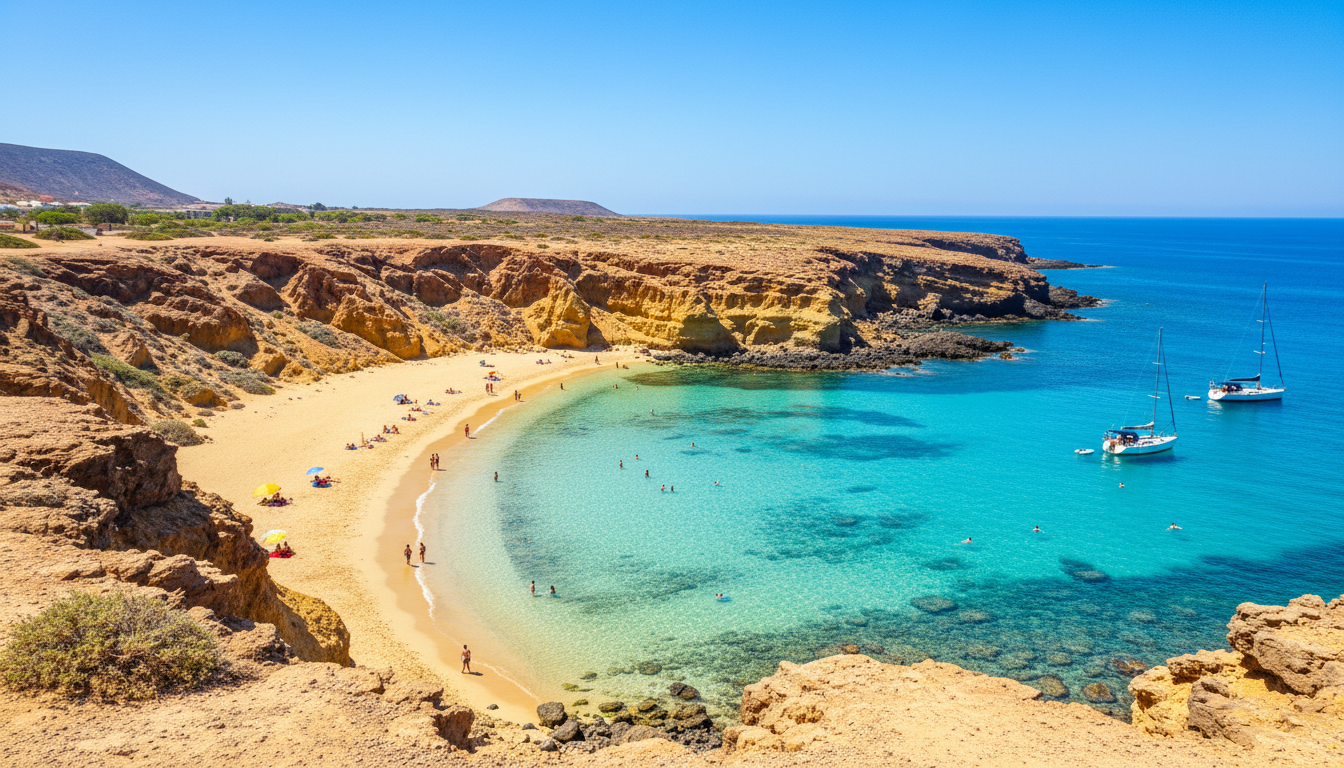
Lanzarote’s beaches are like the island itself: golden sand set against black lava, white villages and red volcanoes. Some are calm coves perfect for a swim, others are wild Atlantic beaches better for surfing or simply looking. Here are the best ones and what each is good for.
Quick answer: for the most beautiful coves, the Papagayo beaches in the south. For easy family beaches, Playa Blanca or Puerto del Carmen. For surfing and dramatic scenery, Famara. For white sand and rock pools in the north, Caletón Blanco near Órzola.
Lanzarote beaches at a glance
| Beach | Area | Best for | Swimming |
|---|---|---|---|
| Papagayo beaches | South, near Playa Blanca | Beautiful coves, clear water | Very good |
| Playa Dorada and Playa Flamingo | Playa Blanca | Families, easy access | Very good |
| Playa Grande and Los Pocillos | Puerto del Carmen | Resort beach days | Good |
| Playa de Las Cucharas | Costa Teguise | Windsurfing, easy beach | Good |
| Famara | North-west | Surfing, scenery | Not recommended |
| Caletón Blanco | North, near Órzola | White sand, rock pools | Good in the pools |
| Playa de La Garita | Arrieta, north-east | Local beach, surfing | Good on calm days |
The south: Papagayo and Playa Blanca
The Papagayo beaches
The most famous beaches in Lanzarote are a string of golden coves inside a protected natural area, Los Ajaches, east of Playa Blanca. The water is clear and usually calm, and the cliffs around them make each cove feel private. You reach them on a dirt road, where a small fee per car is usually charged at the entrance, or on foot along the coast from Playa Blanca.
Local tip: there are very few services, so bring water, food and shade. Arrive early in high season to find a good spot.
Playa Dorada and Playa Flamingo
In the town of Playa Blanca itself, these two beaches are protected by breakwaters, so the water is calm and shallow. With sunbeds, restaurants and easy access, they are perfect for families with young children.
The east: Puerto del Carmen and Costa Teguise
Puerto del Carmen is the island’s main resort, with long sandy beaches such as Playa Grande and Los Pocillos right next to the promenade. Further north, Costa Teguise has several smaller beaches; Playa de Las Cucharas is the biggest and is popular for windsurfing.
The north: Famara, Caletón Blanco and Arrieta
Famara
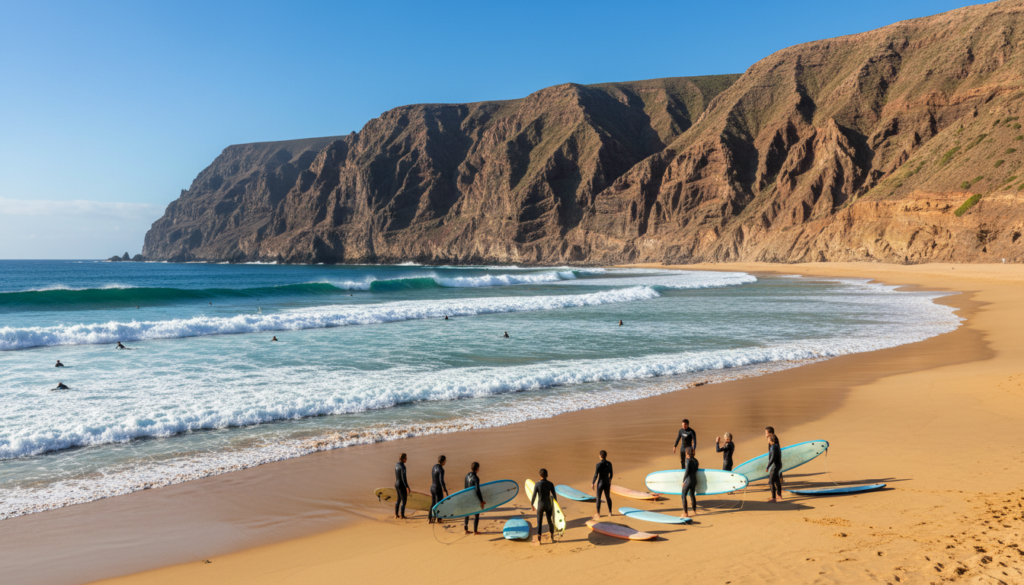
A huge golden beach under the Famara cliffs, with the little surf village of Caleta de Famara at one end. It is one of the most beautiful places on the island and a great place to learn to surf with a school.
Be careful: Famara has strong currents and is often windy. It is a beach for surfing, walking and sunsets, not for a relaxed swim.
Caletón Blanco
Near the village of Órzola, in the far north, white sand meets black lava. At low tide, shallow pools form between the rocks, with calm, clear water that children love. It is also close to the ferry to La Graciosa.
Playa de La Garita, Arrieta
A local beach in the fishing village of Arrieta, popular with Canarian families at weekends and with surfers when the waves arrive. Afterwards, eat fresh fish in the village.
Not for swimming, but worth seeing
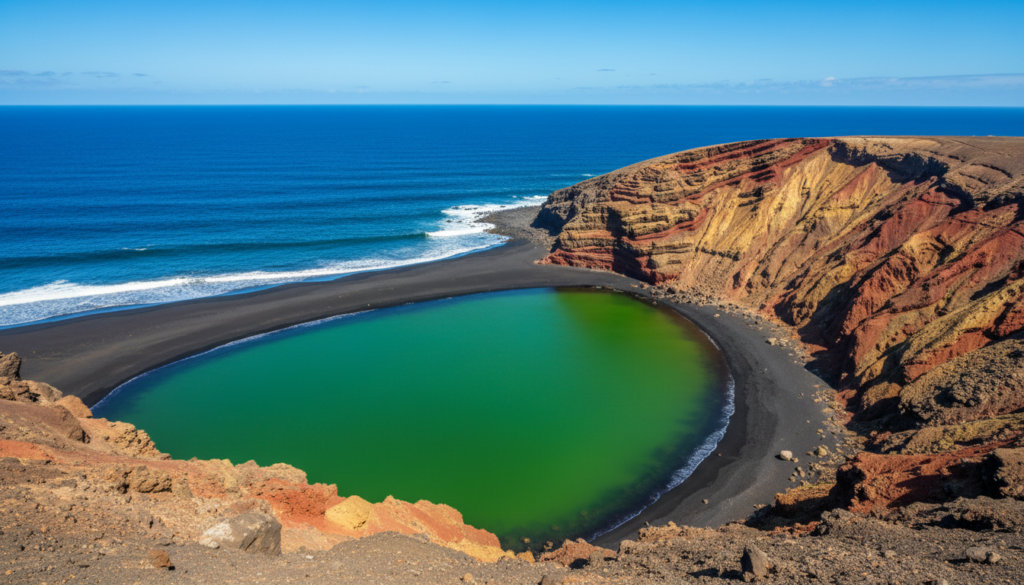
In the west, near El Golfo, the green lagoon of Charco de los Clicos sits next to a black sand beach under a red volcanic crater. Swimming is not allowed in the lagoon, but it is one of the most photographed views on the island. Nearby, Playa de Janubio is a wild black sand beach next to the old salt flats.
Want to surf? Read my guide to surfing in the Canary Islands. Hungry after the beach? See where locals eat on Lanzarote and the other islands.
Frequently asked questions
What is the best beach in Lanzarote?
The Papagayo beaches for beauty and calm water. Famara for scenery and surfing. Playa Blanca and Puerto del Carmen for easy family beach days.
Does Lanzarote have white sand beaches?
Most beaches have golden sand. Some, like Caletón Blanco in the north, have very light, almost white sand, and others are black volcanic sand.
Can you swim at Famara?
It is not recommended unless conditions are calm and you are a confident swimmer. The currents can be strong. For swimming, the south of the island is much safer.
Beach conditions, access fees and rules change. Always check the flags and local signs on the day.
Leave a Reply